- +234 70 4149 7660
- info@ekundayoeduconsult.com
- Lagos Nigeria

Caregiver Certifications (Local and Foreign)
Caregiver Certifications ( Local and Foreign)
PAYMENT AND REGISTRATION DETAILS
Company’s Account
1222030790
Zenith Bank
Ekundayo Educonsult for Healthcare Professionals.
Domiciliary Account
3184967233
First Bank of Nigeria
Mustapha Yusuf Ekundayo
For International Students
Any of the options below can also be used
– Western Union
– Money gram
– World Remit
– Mukuru, etc
Send proof of payment through our WhatsApp Chat Icon visible on every page
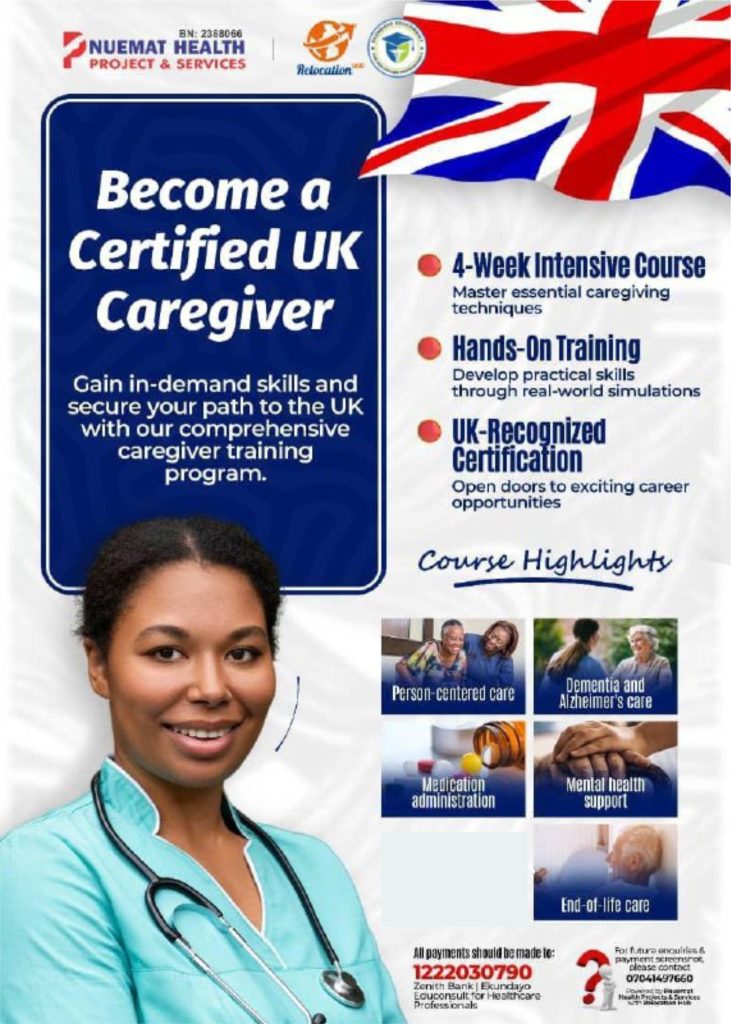
Caregiver Certifications ( Local and Foreign) United Kingdom
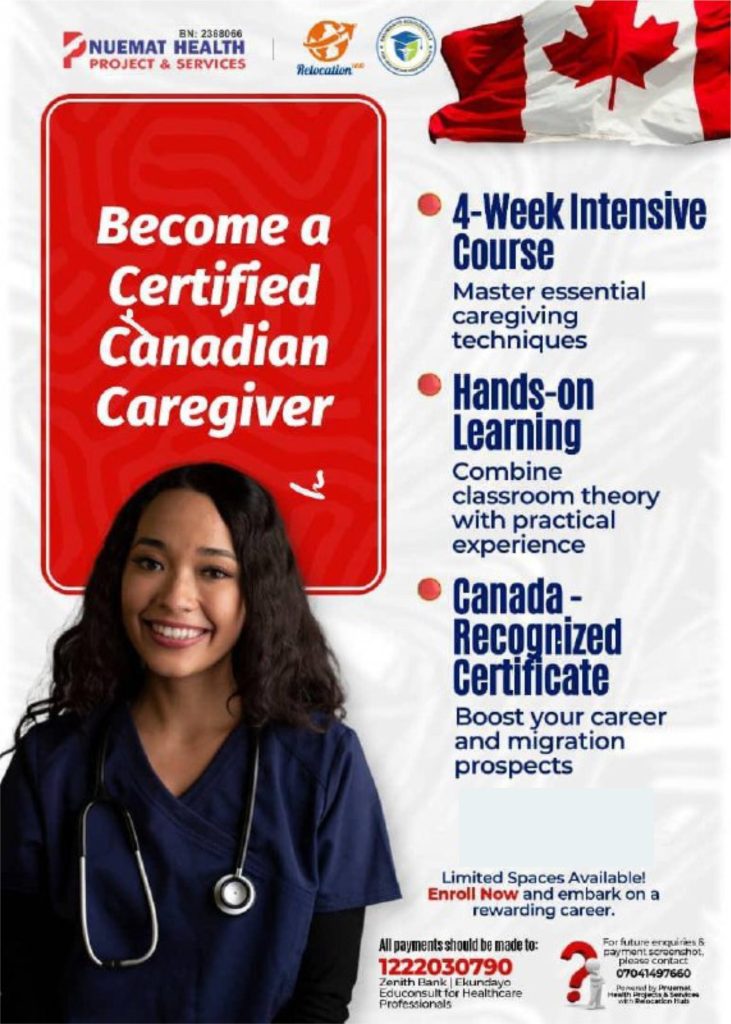
Caregiver Certifications ( Local and Foreign) Canada
Caregiver Certifications: A Pathway to Professional Excellence
Caregiving is a profession that demands compassion, skill, and continuous learning. Whether you’re a beginner or an experienced caregiver, obtaining certifications—local or international—can elevate your career, improve job prospects, and enable you to provide better care to those in need.
This comprehensive guide explores the top caregiver certifications available locally and internationally, their benefits, and how to pursue them.
1. Why Get Certified as a Caregiver?
1.1 Professional Recognition
- Certifications validate your skills and demonstrate your commitment to providing quality care.
- Employers prioritize certified caregivers for positions in healthcare facilities and private care.
1.2 Enhanced Skills and Knowledge
- Certification programs cover critical topics like first aid, patient communication, and specialized care techniques.
1.3 Career Advancement
- Certifications make you eligible for higher-paying roles and leadership positions in caregiving.
- International certifications expand opportunities to work abroad.
2. Local Caregiver Certifications
2.1 Top Programs in Nigeria and Africa
Nigerian Red Cross Society Training:
- Focuses on first aid, basic nursing skills, and emergency response.
- Suitable for entry-level caregivers.
National Association of Caregivers Nigeria (NACN):
- Offers comprehensive caregiver training and certification for home-based care.
Ekundayo Educonsult Caregiver Certification:
- Combines practical and theoretical modules tailored to caregiving in African contexts.
2.2 Requirements for Local Certifications
- Minimum education: High school diploma or equivalent.
- CPR and basic life support (BLS) training.
- Hands-on experience through internships or supervised practice.
3. Foreign Caregiver Certifications
3.1 Recognized International Programs
American Caregiver Association (ACA):
- Offers Certified Nursing Assistant (CNA) and Advanced Caregiver Specialist (ACS) certifications.
- Online and in-person training options available.
National Association for Home Care and Hospice (NAHC) – USA:
- Focuses on home care and hospice caregiver certifications.
Canadian Caregiver Training Program:
- Prepares caregivers for Canada’s healthcare system.
- Includes specialized training for elderly care and disability support.
UK Care Certificate:
- Required for caregivers in the UK’s health and social care sector.
Australian Aged Care Training:
- Focused on aged care, dementia care, and disability support.
3.2 Requirements for International Certifications
- Basic education requirements vary by program.
- English language proficiency for programs in English-speaking countries.
- Work experience or internship in caregiving may be required for advanced certifications.
4. Key Topics Covered in Caregiver Certification Programs
4.1 Basic Caregiving Skills
- Hygiene and grooming assistance.
- Mobility support and fall prevention.
4.2 Health and Safety Training
- First aid and CPR certification.
- Infection control practices.
4.3 Specialized Care Skills
- Elderly care, including dementia and Alzheimer’s support.
- Childcare and special needs care.
4.4 Communication and Interpersonal Skills
- Building trust with patients and families.
- Navigating cultural differences in caregiving.
5. Benefits of International Certifications
5.1 Global Opportunities
- Certified caregivers can work in countries with high demand for caregiving professionals, such as the US, UK, Canada, and Australia.
5.2 Competitive Salaries
- International certifications qualify caregivers for higher-paying positions abroad.
5.3 Professional Development
- Exposure to advanced caregiving techniques and technologies.
6. How to Choose the Right Certification Program
6.1 Identify Your Career Goals
- Are you focusing on local caregiving or looking for international opportunities?
6.2 Research Accreditation
- Ensure the program is recognized by relevant local or international bodies.
6.3 Assess Course Content and Format
- Choose programs that balance theoretical knowledge with hands-on training.
6.4 Consider Costs and Time Commitment
- Compare program fees and duration to find one that fits your budget and schedule.
7. Steps to Become a Certified Caregiver
7.1 Enroll in a Program
- Select a reputable local or international certification program.
7.2 Complete Training
- Attend classes, complete assignments, and participate in hands-on sessions.
7.3 Pass Certification Exams
- Most programs require passing an exam to earn certification.
7.4 Maintain Certification
- Some certifications require periodic renewal or continuing education.
8. Top Skills Employers Look for in Certified Caregivers
- Empathy: Ability to understand and share the feelings of patients.
- Problem-Solving: Quick thinking in emergencies.
- Physical Stamina: Ability to assist with mobility and daily activities.
- Technical Skills: Proficiency in using caregiving equipment and tools.
- Cultural Sensitivity: Adapting care approaches to diverse backgrounds.
9. Why Choose Ekundayo Educonsult for Caregiver Certifications?
9.1 Comprehensive Training Modules
- Tailored to local and international caregiving standards.
9.2 Expert Instructors
- Industry professionals with years of caregiving experience.
9.3 Flexible Learning Options
- Online and in-person courses to suit your schedule.
9.4 Career Support
- Guidance on job placements and international opportunities.
Conclusion
Obtaining caregiver certifications—whether local or international—is a vital step toward advancing your career. Certifications enhance your skills, improve your employability, and open doors to opportunities both at home and abroad.
At Ekundayo Educonsult, we provide world-class training programs designed to help you excel in caregiving. Enroll today and take the next step in your professional journey!